Summarize.
In the 1950's, the idea of separate but (supposedly) equal was still very prominent in the school system. In Topeka, Kansas, a little black girl in third grade had to walk over a mile to the black school every day when a white school was only a short distance away from her home. Her father, Oliver Brown, attempted to enroll her in the white school, but the principal of the school refused, so he went to the area's NAACP head and asked for help. McKinley Burnett was eager to take this chance to challenged segregated schools, and went to court against the Topeka Board of Education. They argued that black schools were often inferior to white schools and thus were not equal, while the Board argued it just prepared black children for the segregation they would face in adulthood.
This case went all the way to the Supreme Court, where it was combined with other cases challenging school segregation in other states. In 1952 the Court first heard the case but failed to reach a decision, but in 1953 they heard it again and decided that though the school may or may not be technically equal, the inferiority it gave to black students made it unequal, and thus struck down the "separate but equal" doctrine set by Plessy v Ferguson, at least in schools.
Saturday, March 31, 2012
Saturday, March 17, 2012
LAD#36: Truman Doctrine
Summarize.
Truman opens by addressing the Congress with his belief that the national security is threatened, and one part of this also concerns Greece and Turkey. The Greek government had sent an appeal to the US for economic assistance. Though peaceful, they had been ravaged by WWII and for a time a militant minority took power, but now they find themselves barely able to sustain themselves and require help to reconstruct. They are also currently being threatened by communist terrorists which they cannot fight against. Truman believes the United States must be the one to supply the assistance Greece so clearly needs. The United Nations would not be able to supply the immediate action needed, and no other democratic country is willing or able. Though it has made mistakes, Truman insists that no government is perfect but we should supervise the usage of any assistance we give to them. Truman also believes Turkey needs support in order to modernize themselves, support they have asked for but that only the US could give them.
Truman believes that a primary foreign policy of the United States is to create a world free of coercion, which is what WWII had been fought and the United Nations formed for. However, he states, many nations had recently had totalitarian regimes forced upon them. He believes the United States must be the one to assist free people in making their own choices, not having a choice forced upon them. Should Greece be taken over by an armed minority, Turkey would surely fall tot he same fate, and soon after the entirety of the middle east, and it would be disastrous not only for them but for the world.
On that note, Truman asks Congress to take immediate and resolute action to assist Greece and Turkey, and investment that would surely be more than worth it by saving free people from totalitarian rule.
Sunday, March 11, 2012
LAD#35: FDR's Executive Order No. 9066
Summarize.
Justified by the need to take every possible defensive action during a state of war and by his authority as commander in chief, FDR authorizes the Secretary of War and his designated commanders to restrain certain people as they see fit in military controlled areas. FDR also authorizes them to take whatever action necessary to accomplish this, including the use of federal troops, and directs all of the executive department to assist the Secretary of War in this endeavor.
LAD#34: FDR's Declaration of War
Summarize.
FDR first speaks of the previous day, December 7th, 1941, the "date which will live in infamy", when the United States was attacked by Japan. Previously, Japan and the United States had been in good relation, working for continued peace, but while doing so the Japanese were secretly planning this attack that destroyed a good portion of America's naval forces and took many American lives. Meanwhile, Japan also was launching a massive attack in the Pacific.
FDR then asks that the United States do what is right in defending themselves, and through absolute victory, never again be threatened by such hostilities. He ends the speech by asking Congress to declare war on Japan.
Monday, March 5, 2012
LAD#33: Franklin D. Roosevelt's First Inaugural Address
Summarize.
FDR opens by stating that he will do just as the people expect from him by speaking very frankly about the times, as he is not afraid of these problems, nor should the people be. "The only thing we have to fear is fear itself". He then points out that these problems are thankfully only material, within the economy, the greatest of which is that unemployment has skyrocketed. However, he points out these problems did not come from lack of substance, but rather lack of competence from those who controlled it in the form of credit.
FDR then says that action needs to be taken. First, by finding jobs for people. Secondly, by redistributing the economy to raise the value of agricultural endeavors and lowering government taxes. And lastly, by setting up a system so that an economic depression of this magnitude can never happen again; namely by supervising banking and creditors and ending speculation of money. He promises to immediately put into effect this plan of action.
He then encourages something of isolationism while the nation puts itself back together economically, and encourages the American people to turn to and help each other in order to recover. He then also describes that the greatness of the Constitution comes from its flexibility, and he admits that he may need to use that flexibility in order to take action swiftly and effectively. He ends by asking God to protect the American people and help guide him as the country's leader during these times.
Saturday, March 3, 2012
LAD#32: Kellogg Briand Peace Pact of 1928
Summarize.
Treaty between the United States and other world powers (including Germany, Belgium, France, Great Britain, Ireland, India, Italy, Japan, Poland, and the Czech Republic) denouncing war as a foreign policy, in support of the welfare of mankind. Instead, national policies toward one another should be conducted through peaceful negotiation. Representatives for each country included Secretary of State Frank B. Kellogg as the representative for the United States, and Aristide Briand as the representative for France, among others.
Article I states that each country within the treaty shall condemn war as a means to solve international problems or as any sort of foreign policy. Article II states that each country withing the treaty shall only use peaceful means to solve problems. Article III describes the ratification process of the treaty.
Sunday, February 12, 2012
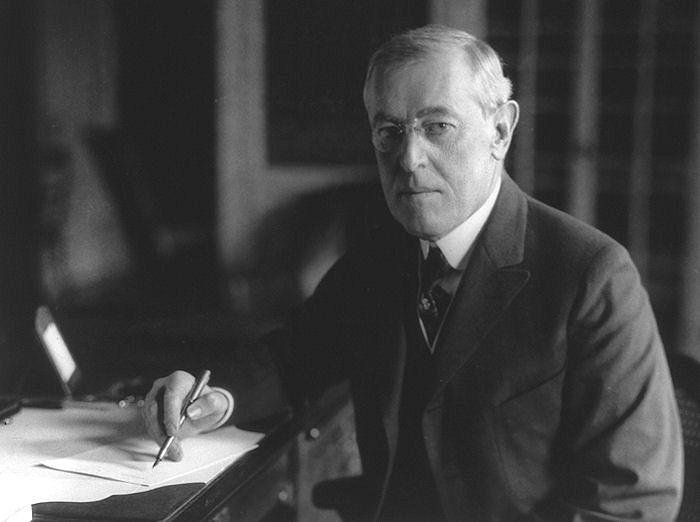
LAD#31: Wilson's Fourteen Points
Summarize.
Delivered by President Wilson to Congress on January 8th, 1918, the speech begins by answering the European powers and assuring the country that the Great War was being fought for moral reasons and as the war to end all wars, to create a world fit and safe to live in. Wilson then gives his fourteen points, or the United States' idea of how to create world peace. Briefly;
1: Public diplomacy and negotiations.
2: Absolute freedom of the seas.
3: Removal of economic barriers and creation of equality in trade.
4: Reductions by all nations of their armies to the lowest point consistent with public safety.
5: Adjustment of colonial claims to the interests of both the inhabitants of the colonies and the colonial powers.
6: Russian independence and evacuation of it's territory by other powers.
7: Evacuation and restoration of Belgium as independent.
8: Evacuation of France and the return of the Alsace-Lorraine territory to France.
9: Readjustment of Italian borders.
10: Independence of multiple nationalities in Austria-Hungary.
11: Evacuation of the Balkan states and allowance for them to be independent along lines of established nationality.
12: Protection of minority states in Turkey and free passage through the Dardanelles by all nations.
13: Independence for Poland, including free access to the sea.
14: A "League of Nations" should be formed to allow security for large and small powers alike.
Wilson concludes his speech by encouraging that all powers must act as one to allow safety and peace throughout the world. He also urges not to harshly punish Germany, but to allow it to remain among the world powers.
LAD#30: Schenck vs United States
Summarize.
During WW1, Schenck mailed to draftees a circular suggesting the draft was a monstrous wrong motivated by the capitalist system, and urged the draftees not to submit to intimidation but instead advised peaceful action against it. Schenck was charged with conspiracy by attempting to cause insubordination in the military and obstructing recruitment.
The case decided unanimously that Schenck was not protected by the first amendment in this situation, because it was during wartime and every interpretation of an act depends on the circumstances. In this circumstance, judge Holmes said that free speech was only protected so far as it did not present a "clear and present danger".
Sunday, February 5, 2012
LAD#27: Clayton Anti-Trust Act
Summarize.
The Act finally did what the Sherman Antitrust Act could and did not. The Act outlaws price discrimination that lessens competition or tends to create a monopoly, sales if it may lessen competition, mergers and acquisitions that may lessen competition. It also prevents any person from being the director of more than one competing corporation that would violate the act by merging.
Section 7 of the Act defines a holding company as one whose primary purpose is to hold stocks of other companies and outlaws it. It also requires a company to notify the government should it be thinking about a merger or acquisition of another company.
The difference between the Clayton and the Sherman antitrust acts is that the Clayton act made sure that it could not be used against union activities. Section 6 exempts labor unions and agricultural organizations from the provisions in the act.
Monday, January 16, 2012
LAD#26: Martin Luther King Jr.'s "I Have a Dream"
Summarize.
King references Lincoln and his Emancipation Proclamation, the first step towards a freedom for blacks that still had not been achieved completely one hundred years later, due to segregation and discrimination. He then speaks of the Declaration of Independence as a promissory note that all men were equal and guaranteed their unalienable rights, a check that African Americans had been unable to cash. He then encourages a sense of urgency, that the time for gradual change has passed, that at this point it would be fatal to overlook it any longer. He states that there will "be neither rest nor tranquility... until the Negro is granted his citizenship rights".
However, he goes on to say that in their urgency, the black people must not succumb to bitterness or violence in their search from equality. The must treat white men as brothers, and maintain a sense of discipline and dignity. But they must not rest until segregation and discrimination are completely demolished, and they have achieved their rightful status as equals with whites, no matter what hardships they have faced or will continue to face.
King then goes on to describe his dream, one deeply rooted in the American dream; that America will one day truly follow it's own belief of all men being created equal, that one day blacks and whites will be brothers, that freedom and justice will come especially to the state of Mississippi, that his children will not be judged by their color but by their character. He dreams that one day black and white children in Alabama will be able to join hands, that the plain will become level for all Americans. He once again urges faith, that though there will be struggle and despair, some day freedom and justice will come out of it all, and freedom will ring across the United States and benefit all, white and black alike.
Sunday, January 8, 2012
LAD#25: The Dawes Act
Summarize.
The purpose of the Dawes Act was to provide land allotments to individual Indians and to extend the protection of the law of the United States to them, among other things. On the first purpose, they laid out grounds that reservation land deemed useful agriculturally to be divided into sections, and each head of the family to receive a quarter section, each single person or orphan an eighth section, and each child a sixteenth section. If there was not enough land to do this, it would be divided by availability. In section two of the act, it is described that the Indians shall make their own choice as to where there section lies, and in case of argument the section will be split and both sides allowed to look for additional land according to their allotment. Section five gives the right for the government to negotiate with an Indian tribe for purchase of any land allotted, and this purchase must be approved by Congress and only used for specific settlement ideals. Section seven details the extension of the protection by the laws to the lands and their inhabitants, and that no other law may be passed to deny them this. It also declares that any Indian born on American soil is considered an American citizen will full rights.
However, this act did not apply to the Five Civilized Tribes (Creek, Choctaw, Cherokee, Chicasaw and Seminole), the Osage, the Miami, the Peoria, the Sac and Fox, or the Seneca in New York.
LAD#24: William Jennings Bryan's "Cross of Gold" Speech
Summarize.
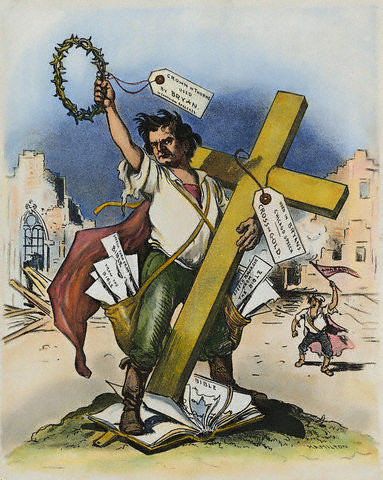
Bryan first discusses what brought him to this speech; the fight between those who want a gold standard and those who believe in a silver-to-gold ratio of 16 to 1. He then goes on to speak of businessmen, and how even the lowliest worker is just as much of a businessman as his employer. He says that the job of the representatives in Congress was to represent all these people, especially the workers, as they are the majority. And he believes that bimetallism as opposed to the gold standard is the way to create fairness between the people. He defends it by giving multiple examples, and then refutes counterarguments. He does this by describing how the cities, who are in favor of a gold standard, were destroyed, if the farms were left alone they would recover. But if the farms, who would benefit from bimetallism, were destroyed, the cities will crumble. He also says that just because other countries are on the gold standard doesn't make them right. Finally, he describes how he will fight anyone supporting the gold standard, because as he is a representative of the people, he will protect what would be best for them.
Saturday, January 7, 2012
LAD#23: Populist Party Platform
Summarize.
In the 1890's, the populist party, emerging from the farmers alliances of a few decades before, was a formidable third party against the republicans and the democrats. Their main idea was an opposition to industrialism, believing it was the downfall of American society.
In the preamble to their platform, the populists state that they believe they are in the midst of a nation falling apart due to the corruption and greed of a few. These few are becoming the demise of the entire population, and the republican and democratic parties are doing nothing to stop it, even though they are the only ones who in this condition would be able to. The populist party wants to give the power back to the people, and fix the problems within the economy.
In their platform, the populist party believes that labor unions should be a permanent institution, that wealth belongs to those who create it not those on top, and that the government should take control of managing the railroads. Involving the economy, the populists believe silver and gold should remain valued 16 to 1, that more money should be printed, that there should be a graduated income tax, that the government funds should be limited, and that the government should create safe banks for the people's money. They also believe that land should belong in the hands of the people, not owned by corporations in excess or by aliens.
They also demand a free and fair ballot. They condemn opening the borders to just anyone, the standing mercenary army, and any aid to any private corporation for any reason. They also resolve that they will bow to the will of the people.
Wednesday, January 4, 2012
LAD#22: McKinley's War Message
Summarize.
In 1895, the Cubans revolted against their Spanish rulers, starting a war that the United States would stay neutral to for three years until it gave Madrid and ultimatum that the fighting stop or else. Though the Spanish said they would cease fighting, war spirit flared up in the US and they joined on the side of Cuba.
McKinley first speaks of the affect the war has had on the American people in their attempt to stay neutral. It has hurt trade and investments. He then goes on to say that as the war is going now, it would have to end in either the exhaustion or destruction of one side or the other, which could take immeasurable time. Thus he proposes that the United States intervene either as a mediator or an active ally of one side or the other, and rules out the mediator rule as attempts have been made at it in vain. Then he justifies acting as an active ally as stopping the bloodshed, protecting Americans and their interests in Cuba, and responding to a potential threat to the United States.
McKinley then uses the destruction of the battleship Maine as an example of how bad the situation has become in Cuba. Spain wants what it can never truly have now that Cuba has shown such determination in rebellion, but they will continue a senseless war unless the United States stops it, says McKinley, and he asks Congress' approval of an alliance with Cuba. He hopes that the ultimatum given to Spain succeeds in their giving up the fight, but if not, it is just another justification for entering the war.
Monday, December 12, 2011
LAD#20: Emancipation Proclamation
Summarize.
Lincoln proclaimed on September 22nd 1862, that on the first day of January in 1863, all slaves, in any state especially those at the time rebelling, would be considered freedmen. The government and military, if need be, would enforce this proclamation. Lincoln urges these freedmen to abstain from violence unless it is in self-defense, and to work for reasonable wages. He also declares that the freedmen may choose to join the army as well. He closes by saying that he believes all of this act to be an act of justice allow by the constitution.
LAD#19: Lincoln's Second Inaugural Address
Summarize.
Lincoln starts by saying there is little new to say as there was in his first inaugural. Unlike the first, where half the nation was desperately trying to save the union without war and the other half trying to break from the union, now they were in the middle of it. He attributes the issue of slavery as a major component of the war, as the southern insurgents wished to extend it while the government merely wished to restrict its territorial enlargement. No one thought slavery would end, due to the emancipation proclamation, before the fighting did, but then again God did not fully answer either side’s prayers. Lincoln continues to speak of God, indirectly praying that the conflict should soon come to an end but accepting that if it were to continue, that was His will. He ends by not wishing malice upon anyone, only peace, and for the nation’s wounds to be healed.
Saturday, December 10, 2011
LAD#21: Carnegie's Gospel of Wealth
Summarize.
Carnegie believes that in earlier times, there was little difference in the situations of the rich and poor. Now that there is, he argues, it is for the better that some live in more comfort than none do, and it is essential for the progression of civilization. He believes that it should be the aim of all to acquire a moderate wealth to live comfortably. He finds a surplus of money can be disposed of in one of three ways; left to decedents, left after death towards public purposes, or given away by the possessor during his life. He believes the first way to be unjust, pointing to the high class in Europe who have become impoverished due to their own mistakes or a fall in value of land, believing that it is of no benefit to the receiver to simply be given such wealth. The second he also believes to be questionable, for the wealth may not be used as the giver intended as he would no longer have any say in it. However, he does believe in taxing a wealthy estate after death, since a selfish millionaire in life should be condemned by the state at his death, and would encourage a rich man to administer his wealth during his lifetime. This is the third point, of which Carnegie believes is the best and only way to use fortunes. He believes it is the best antidote for the temporary unequal distribution of wealth that differs from a communist overthrow of a system but is instead a further evolution of it. The surplus wealth of a few will thus become the property of many when the individual administers it for the common good, as when it passes through the individual the wealth can be a bigger force than small sums distributed to the masses.
Finally, Carnegie believes it is the duty of the wealthy to set an example of modest living, not of extravagance, but to provide moderately for those dependent upon him, and to administer any surplus towards the common good in a philanthropic and intelligent manner.
Monday, November 21, 2011
LAD#18: Dred Scott Case
Summarize.
The court originally rules in favor of Sanford, against Scott, but they did not take into account the larger issues of African American citizenship and the constitutionality of the Missouri Compromise. Justice Nelson, who was chosen from the majority to write the decision, ended up only conveying his opinion, so the court threw it out and had Cheif Justice Roger Taney write another one that would encompass the majority opinion as well as all the issues in question.
President-elect James Buchanan touched upont he issue in his inaugural address on March 4th 1857, when the case was close to being closed, saying that it was soon to be settled and that he would agree to whatever decision the Supreme Court made. Two days later, the justices again gathered, their majority rule to be read by Taney who was at this point old and sickly. Taney first addressed the question of African American citizenship, stating that even freedmen were not citizens and therefore had no right under the constitution to sue in court. Taney then addressed the constitutionality of the Missouri Compromise, saying that Congress did not have the right to deny any citizens of a territory under United States control the rights of liberty or property without due process of law. Taney argued that the Consitution made no distinction between slaves and property, and reasoned that the Missouri Compromise denied slaveholding citizens their porperty in the form of slaves, therefore it was unconsitutional. Finally, Taney made the decision that since Scott brought the case in Missouri, a slave state, he was to be considered a slave. Therefore, due to all of these reasons, Taney declared the case to be dismissed due to lack of jurisdiction.
Sunday, November 20, 2011
LAD#17: Ain't I a Woman?
Summarize.
Sojourner Truth first states that with so much racket there must be something wrong, and she guesses it must have to do with the African Americans in the south and the women in the north talking about their rights. She says that men are always saying women need to be treated with good manners, but she is never treated with any of it. And isn't she a woman, she asks, and tells about the hard work she has been forced to do and only receiving punishment, but isn't she a woman?
She asks what intellect has to do with giving anyone rights; that even if someone else may be smarter, wouldn't it be mean for them to not let those less fortunate have what they were given? She goes on to say that those who justify women not having rights purely because Jesus was a man is crazy, because Jesus came from a woman and God. "Man had nothing to do with Him."
She closes by saying that if the first woman God created, Eve, was enough to turn the world upside down, the combined strength of the women now should be able to turn it right side up again, and the men had better let them.
LAD#16: Frederick Douglass' "5th of July" Speech
Summarize.
Delivered in Rochester in 1852, Douglass first questions why he had been asked to speak at all, wondering what the or the blacks he represented had to do with the Declaration of Independence when they were not given the rights stated within it. He then goes on to say that the celebration of Independence Day only serves to further the distance between the two races, since they celebrate the blessings which they did not give to the slaves and blacks. He then questions if the people were mocking him by asking him to speak.
Douglass then speaks of the "mournful wail of millions" and that he cannot ignore them, the American slaves. He says that in their eyes, the nation never looked worse nor more false as the day the people celebrated rights that they refused to give to anyone not of their race. He says how surprising it is that African Americans have to prove themselves to be men while they are pursuing jobs and dreaming of the same life just as any other American, but without wages and without liberty and without personal safety.
He closes by summarizing what the 4th of July is to an American slave: a day that reminds him of the injustice he is served. Douglass accuses the Americans at this time to be committing the worst injustice history has ever known.
Subscribe to:
Posts (Atom)