Saturday, November 19, 2011

LAD#15: Lincoln's Gettysburg Address

Summarize.
Lincoln begins by stating that 87 years ago, their forefathers created a new nation based on the belief in liberty and that all men are created equal. Now, they are engaged in a civil war that is testing whether that nation or any similar to it can last. He states that they are now met on a great battlefield, where it is fitting and proper that they will dedicate a final resting place for those who gave their lives so that the nation might live. However, he says, they cannot make the ground sacred as much as the men who fought and died on it did. History will not remember what was said there, but it will remember what happened there. Lincoln then states that it is the duty of the living that they finish the work which those who fought had so nobly began, that they give more devotion to the cause which those who died gave the last full measure of devotion; which is to preserve the nation "of the people, by the people, for the people".

(Note- my summary does not do this speech justice.)

LAD#14: Lincoln's First Inaugural Address

Summarize.
Given on March 4th, 1861, Abraham Lincoln begins his first inaugural address by saying he would only speak of those matters of special importance or anxiety. He then addresses the particular anxiety coming from the south, and that there has been no reasonable cause for it. He asserts he has no purpose to interfere with slavery, and does not believe he has the legal right to. He denounces the fears of the southerners that a Republican administration would put their peace and lifestyle at risk. He pointed out that he had just taken an oath to uphold the Constitution and that this meant he had agreed to execute all laws faithfully in all states, including those that had seceded. He assured there would be no use of force against the southern seceded states unless it proved absolutely necessary for him to do so in order to reestablish the union or if the south made the first offense. Lincoln stated that the Constitution was a contract binding all the states into the union, and in order for secession to be legal, all of the states had to agree upon it first. He also said that he had no objection to an amendment to the Constitution, if that is what the people wanted. He states that the President derives all his power from the people and though the people can separate the states it must be done under their agreements, since the President's duty is only to enforce the government as he received it. He also points out the power of the people in that they leave so little room for government mischief that it cannot be ruined in the span of a term of four years. He encourages the people to think long about their decisions, to not rush into them lest they make a mistake. He also points out that the people have taken no oath to destroy the government, while he had just taken one to preserve, protect and defend it.

Monday, November 14, 2011

LAD#13: John Calhoun on the Clay Compromise

Summarize.
(written by John Calhoun, who was too sick to deliver it; read by another senator with Calhoun present.)
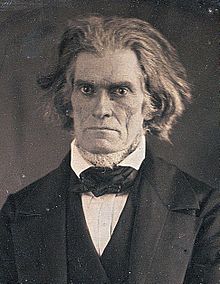
Calhoun first presents a question of how the union can be preserved, then steps back and asks what endangered it in the first place, then further to ask what has caused the discontent that is endangering the Union, despite efforts of political leaders to discourage it. The southern states no longer believe that they cannot remain honorably or safely within the Union, due to agitation of the slavery question by the North and unequal representation in the government continually favoring the North, due to a larger population (thus control of the House) and continually more numerous states in the North while there has been no new state added to the South (thus control of the Senate). This destorying of equillibrium, had it come naturally, would not be a cause for complaint. However, legislation pushed by the north -inlcuding acts excluding the south from growing as the north was, higher taxes imposed on the South and higher proceeds going to the North, and a radical change in the original character of the government- have unnaturally destroyed the equality between the two sections. The higher revenue going to the North also explains why immigrants tend to locate there and thus increase the population of the northern states, while the South recieves few to none.

Another major issue causing the feelings of sectionalism is the argument over slavery; to the south it is a vital part of their social and economic organization, while to the north it is basically viewed as a blemish, crime, or even a sin they have a moral obligation to destroy. Unless something decisive is done to stop this agitation, the south may end up being forced to choose between abolition and secession. However, this disunion is not something that comes easily, but over time with many blows to the cords that tie the union together; and this is what has been happening. When all the cords are broken, the only thing that could keep the union together is force, and that in itself cannot create a true union.

However, the union can be saved if the basic causes that are causing the southern states to fear their honor and safety can be removed without the south being forced to surrender more than it already has. The north must concede to the south equal territory, to stop agitating the slavery question, and to make an amendment to the constitution to protect southern equality with the north. Otherwise, the union should be broken.

Sunday, November 13, 2011

LAD#12: Polk's War Message (1846)

Summarize.
Polk first describes how the desire to establish peace and good relations with Mexico failed due to the unwillingness of the Mexican government. He asked the Mexican Government under General Herrera if they would receive an envoy; upon answering affirmatively, Polk sent John Slidell with full powers, including the power to discuss the adjustment of borders. However, soon after Slidell arrived, the government changed hands to General Parades. Polk directed Slidell to ask to be received by the new government, since it had changed so much it could not be justly assumed the previous reception was still in order, but Parades not only rejected Slidell but did so rudely, so he had no choice but to return to the United States without any resolution of the conflict.

Polk then goes on to defend sending troops into Texas, because Texas had wished to annex into the United States and Congress had agreed, and it was under the United States' duty to protect them when the Mexican government threatened an attack. The movement of troops was done under the orders of the general to abstain from all aggressive acts towards Mexico and it's citizens, and to respect them as if it were during peacetime unless Mexico should declare war or themselves attack.

The Mexican forces threatened that unless General Taylor should remove his troops from the area, the question would be decided through arms. However, no act of hostility was made until about two weeks later, when a group of Mexican troops meant to attack the American camp were intercepted by a scouting party, of which 16 were killed or wounded.

Polk continues to describe that Mexico has committed many other wrongs against United States citizens and has refused to honor old treaties. He also describes that commerce between the two nations, which was formerly beneficial to both, has now all but disappeared due to the Mexican authorities' treatment of American merchants. He justifies that as Texas was her own nation, it was her choice to annex into the United States and Mexico has refused to honor that.

Finally, Polk declares that Mexico has invaded American boundaries a step too far, has shed American blood on our own soil, and has declared war, despite the attempts of American government to avoid it. Thus it is the duty of the government to defend the United States.

LAD#11: Seneca Falls Declaration of Sentiments

Summarize.
The Seneca Falls Convention of July 19th, 1848 was something of a response to the cause of emancipation, but in the regards of women instead of slaves. It was held in Seneca Falls, New York, and attended by both women and men, where they drew up a document strikingly similar to the Declaration of Independence.

First the Declaration of Sentiments explains that when a portion of mankind wishes to assume a position different than that which they have always assumed, it is proper to give cause as to why they wish to do this. Then, it rewords the Declaration of Independence, instead saying that "all men and women are created equal", but keeping the same principles of rebellion against an unjust government, and ending by saying that these are injustices suffered by women under the government, and that they are entitled to equality.

It then lists some of the injustices, including: not allowing women to vote, forcing women to submit to laws they had no say in, withheld rights that are given to the lowest of men including any civil rights or right in property, allowing a woman's husband to all but be her master, not allowing women to obtain higher education, and forcing women to live a submissive life. Then it requests that women are given all the rights and privilege which are given to male citizens of the United States, and will employ agents and the press, make petitions, etc. in order to reach this goal.

In the second section, titled "Resolutions", the Declaration justifies resolutions by deriving their validity from the "great precept of nature" that "man shall pursue his own true and substantial happiness". These resolutions include that laws preventing women from being equal to men are against this precept and thus have no authority, that woman is man's equal, that women should be enlightened of and allowed to participate in the forming of laws that they are forced to live under, that equality should mean equality across the board for women and men in social as well as political and economic institutions, and that equally to man it is a woman's duty to do what is right.

Monday, October 31, 2011

LAD#10: Monroe Doctrine

Summarize.
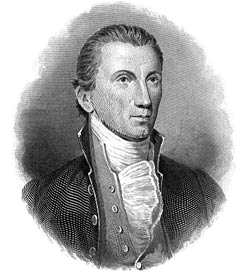
Expressed to Congress on Decemeber 2nd, 1823, during President James Monroe's seventh annual message, the Monroe doctrine opens with reference to a discussion with the Russian Imperial Government and the Government of Great Britain about possible colonization of the northwestern coast of North America. He then states that although he values the friendship of both governments, it is in the best interests of the United States that American continents are to no longer be considered for colonization by any European powers. 

Monroe then goes on to speak of the interest Americans have held in the events of Europe, and how much they hope for the "liberty and happiness" of the men who live there. However, the United States does not take part in European wars when it does not concern them, only doing so when they are threatened directly, unlike in Europe where a complex web of alliances brings countries in to wars that don't necessarily concern them. On this note, any further attempt at colonization of the western hemisphere is considered a threat to the United States' peace and safety.

With the recent events in Spain and Portugal, Monroe finds evidence that Europe is still unsettled. The policy of the United States in accordance with foreign affairs, is and will continue to be friendly neutrality, and not interference with any of it's internal government.

He finds that any attempt of the allied powers to extend their government to either of the American continents without the possible endangerment of the United States, and that those in South America would not adopt a European government of their own accord. Therefore, any such attempts would be considered an unfriendly act towards the United States that would not be met with indifference.

Monday, October 10, 2011

LAD#8: Columbus Blog - Hero or Villain?


Should Christopher Columbus be considered a hero or villain?


Personally I find it hard to believe this, but Columbus was definitely more of a villain than a hero. All my life I was taught Columbus was an amazing explorer for his discovery of the Americas. But his treatment of the natives was terrible. One could say that he as only acting as any man would of his time; foreign, non-white peoples were generally considered slaves, barely above animals. By using that logic it could also be argued to an extent that Hitler was only acting on the antisemitism of his time. So I feel that Columbus is a villain for the way he treated the natives that he and his crew came upon, especially in his second voyage where he dragged 500 natives home to Spain, of which two hundred died en route and most died soon after arrival. Though it was custom for his time, it makes it no less evil an act for him to mistreat another human being, no matter how "primitive".


The one thing I won't do is blame Columbus directly for the mass decline in the population of the American natives. It would be like shooting the messenger; he is not responsible for the actions Europeans took when he told them of his discovery.